Enkitek builds vertical farms that run like factories. Geesesquads provides the engineering squad behind the core of its Farm Management System: edge nodes that control each farm on site, with or without internet, and a cloud platform that collects telemetry, sends growing recipes and tracks production across facilities.
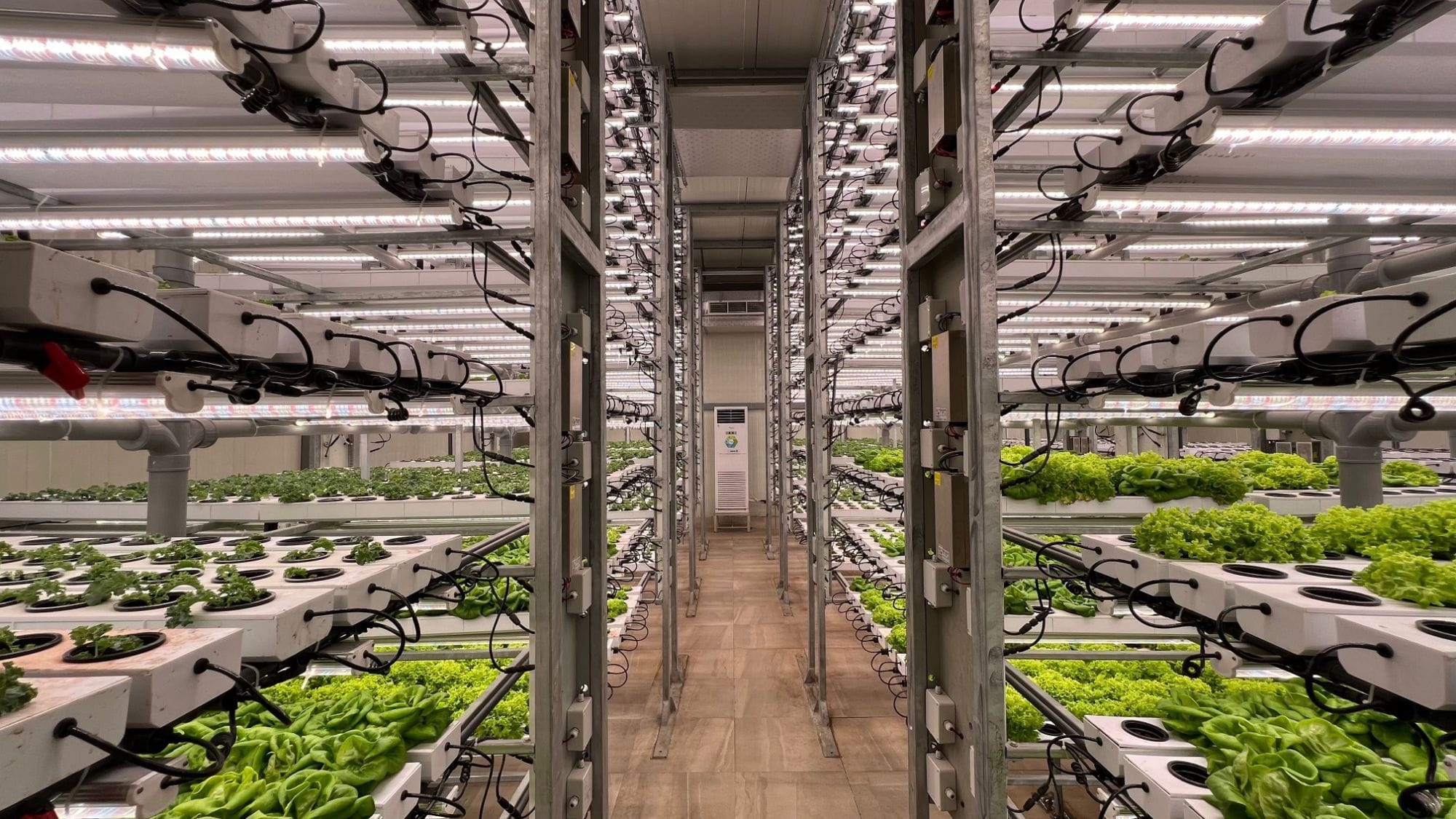
Indoor vertical farms grow within tight biological limits. A small sensor drift or a delay in control shows up directly in the yield, so the software that runs the farm has to be as dependable as the machines it drives.
We split the FMS so that keeping plants alive never depends on the cloud. Autonomous edge nodes run each farm, a cloud FMS oversees every facility, and an encrypted bridge keeps the two in sync.
Each facility gets an edge controller that talks to every device and runs the growing recipe locally. Control loops fire within milliseconds and never wait on the cloud.
Outcome: Lighting, misting and climate control keep running on site, even when the internet is down.
Edge and cloud talk over an encrypted, bidirectional link. When a connection drops and comes back, the bridge replays the buffered data at a pace the cloud can absorb.
Outcome: Telemetry reaches the cloud without dropping a single datapoint.
In the cloud, ingestion microservices take in time-series streams from several facilities at once. Agronomists and facility managers plan recipes centrally and follow production on a supervisory dashboard.
Outcome: Plant-health KPIs for every facility on one dashboard, with the full climate history behind them.
Data flows up from the growing room to the people who plan the crop. Their decisions flow back down to the machines.
pH, EC, CO2, climate and light readings in. Pumps, valves, LEDs and louvers driven out.
Runs the recipe and reacts in milliseconds, online or offline.
Telemetry stored and set against energy, water, nutrients and yield.
Recipes, alerts and crop workflows defined once, centrally.
The device abstraction layer hides each vendor’s quirks, so everything above it sees one schema. Field teams add new hardware by adding a driver, not by changing the platform.
Temperature, relative humidity and CO2 across the growing rooms.
Substrate pH, electrical conductivity (EC) and PAR quantum meters.
Peristaltic dosing pumps and variable fertigation valves.
Dynamic-spectrum LED arrays and motorized ventilation louvers.
Modbus RTU/TCP, MQTT, OPC UA and raw GPIO, behind modular drivers.
Field teams integrate new sensors and industrial actuators quickly through modular drivers.
Control runs on the edge, so an internet cut or a degraded cloud service can’t interrupt a growing cycle.
Every microclimate reading is kept, so agronomists can trace a problem to its root cause and fine-tune the recipe.
Energy, water and nutrient use sit next to biomass yield, so each resource can be weighed against the crop it produces.
Recipes and alert rules are set centrally and sent to the facilities that need them.
With an embedded and cloud back-end team in place, Enkitek can commercialize and scale its own software platform faster.
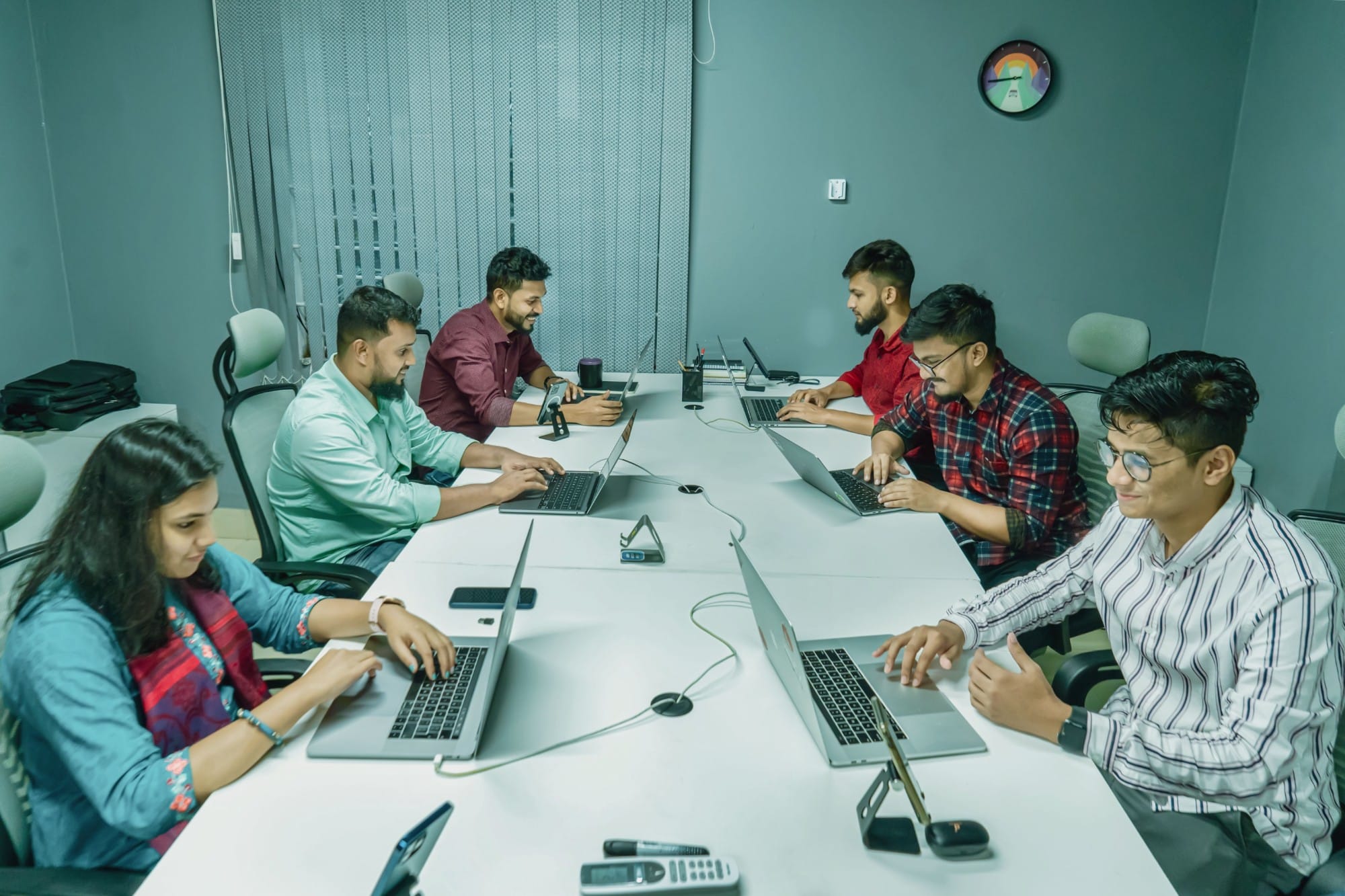
For two years, Geesesquads has led engineering for Enkitek’s IoT, AI model training and FMS. Senior engineers own the hardware-software integration end to end, from the device driver to the cloud dashboard.
Device drivers, the edge runtime and fail-safe routines for physical hardware automation.
Distributed data pipelines, recipe distribution and the production dashboard, built for many facilities at once.
We helped Enkitek build a skilled technical team in India, so it could grow without compromising on quality.
AWS, AI annotation and custom AI model training, whenever Enkitek needs them.
Biological processes don’t pause for network faults. The FMS is designed so that the farm keeps growing when the internet or the cloud fails.
In 30 minutes, we’ll talk through your hardware, your edge and your cloud, and how a dedicated squad could take ownership of it.